Raspberry Pi 5
A compact single board computer that serves as the foundation for most home lab setups. Affordable, low power, and runs full Linux.
What it is
The Raspberry Pi 5 is a credit card sized single board computer built around the Broadcom BCM2712 quad-core Arm Cortex-A76 processor running at 2.4GHz. It runs two to three times faster than the previous generation and is available in 1GB, 2GB, 4GB, 8GB, and 16GB configurations, with the 16GB variant aimed at more demanding workloads.
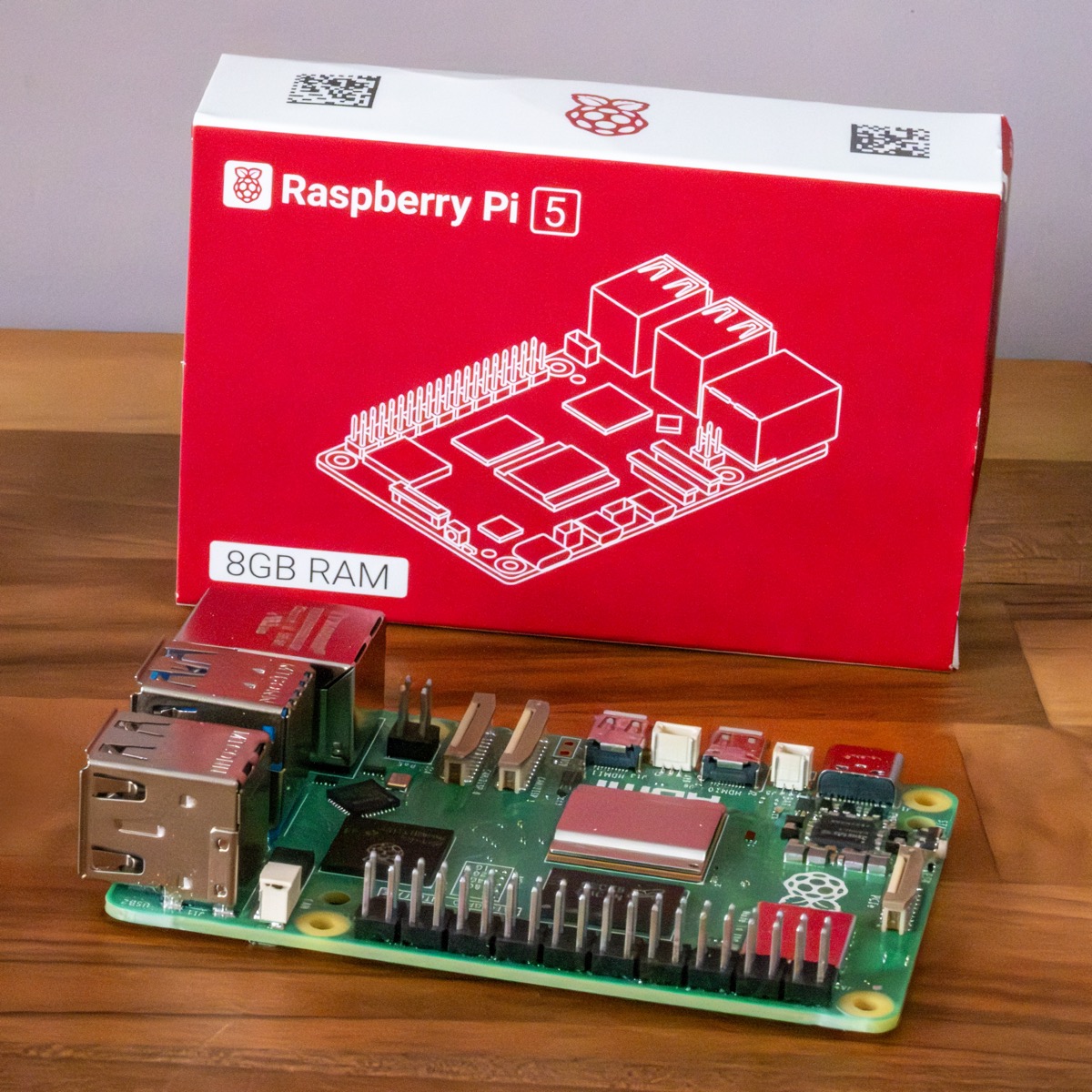
The board is built around the RP1, an I/O controller chip designed in-house at Raspberry Pi. This drives two USB 3.0 ports, two USB 2.0 ports, Gigabit Ethernet with a 4-pin PoE header for use with a compatible PoE+ HAT, and two MIPI connectors that can be used interchangeably for cameras or displays. A PCIe 2.0 interface enables M.2 SSD adapters and AI accelerator HATs. Dual-band 802.11ac Wi-Fi and Bluetooth 5.0 are built in, alongside a real-time clock with external battery support and a hardware power button. Dual 4Kp60 HDMI output with HDR support makes it capable as a desktop machine as well as a headless server.
Under sustained load, active cooling is recommended. A 5V/5A USB-C power supply is required for full performance.
Why it works for a home lab
The combination of price, power consumption, and capability is difficult to match at this size. A Pi 5 running 24 hours a day costs roughly £10 to £20 per year in electricity depending on load and energy tariff. It can run Docker, serve multiple containers simultaneously, and handle moderate network traffic. The PCIe interface opens up add-ons like the Raspberry Pi AI HAT+ 2, making it a capable platform for local AI workloads as well.